
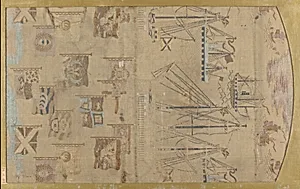
Textile fragment with pattern of ships and flags
Unknown Artist
18th–19th century
Medium
Silk
Dimensions
13 x 8 in. (33.02 x 20.32 cm)
Classification
Textiles-Woven
Culture & Period
Japan · Edo (1615–1868)
Department
Asian Art
Museum
Metropolitan Museum of Art, New York, NY
Credit
Gift of Mr. and Mrs. H. O. Havemeyer, 1896
Accession Number
96.14.185
Rights
Public Domain
Tags
Art Historical Context
This exquisite silk textile fragment, woven in Japan during the Edo period (1615–1868), captures a lively pattern of ships adorned with fluttering flags. Measuring just 13 x 8 inches, this small yet vibrant piece likely originated as part of a larger garment, banner, or decorative hanging, showcasing the era's masterful weaving techniques. Silk, a luxurious material reserved for the elite, was dyed and woven with precision to create intricate motifs that evoke the bustling maritime world of coastal Japan. The Edo period marked a time of relative peace and prosperity under the Tokugawa shogunate, when domestic trade flourished despite Japan's isolationist policies (sakoku). Ships symbolized commerce, fishing, and naval strength, while flags might represent clans, merchants, or festivals—common themes in everyday life and art. Woven textiles like this highlight the technical virtuosity of Japanese artisans, who interlaced warp and weft threads to produce durable, colorful designs without relying on printing. A generous gift to the Metropolitan Museum of Art from Mr. and Mrs. H. O. Havemeyer in 1896, this fragment offers a window into Edo Japan's seafaring spirit and textile heritage, reminding us how everyday motifs reflected a nation's cultural pulse.