
The Actor Nakamura Kumetaro I as a Oiran
ca. 1756
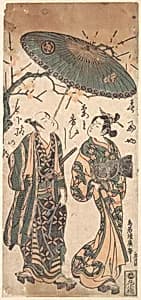
Medium
Woodblock print; ink and color on paper
Dimensions
H. 12 1/8 in. (30.8 cm); W. 5 1/2 in. (14 cm)
Classification
Prints
Culture & Period
Japan · Edo period (1615–1868)
Department
Asian Art
Museum
Metropolitan Museum of Art, New York, NY
Credit
Gift of Estate of Samuel Isham, 1914
Accession Number
JP841
Rights
Public Domain
Tags
Art Historical Context
In the bustling theater districts of Edo-period Japan (1615–1868), woodblock prints like Torii Kiyohiro's *The Actor Nakamura Kumetaro I as an Oiran* (ca. 1756) brought the glamour of kabuki to everyday viewers. This intimate yakusha-e (actor print) captures the celebrated performer Nakamura Kumetaro I the elaborate role of an oiran—a high-ranking courtesan known for her towering hairstyles, ornate kimonos, and poised elegance. Kiyohiro, from the renowned Torii school of ukiyo-e artists, masterfully blends realism and stylization to evoke the "floating world" of pleasure quarters and stagecraft. Printed with ink and vibrant colors on paper using multiple woodblocks—a revolutionary technique for mass-producing affordable art—this narrow, 12⅛ × 5½-inch sheet likely adorned fans or albums. The Torii school's bold lines and dynamic poses highlighted actors' star power, fueling kabuki's cultural obsession and democratizing high art for urban audiences. Today, housed in the Metropolitan Museum of Art's Asian Art Department (gift of the Estate of Samuel Isham, 1914), it offers a vivid window into 18th-century Japan's performative splendor, where gender-bending roles blurred lines between stage and society.
About the Artist
Torii Kiyohiro · 1737–1776
Torii Kiyohiro (active 1737–1776) was a Japanese ukiyo-e artist and a member of the celebrated Torii school, one of the oldest and most distinguished lineages in the history of Japanese woodblock printing. The Torii school had been founded in the late seventeenth century and built its reputation on the creation of billboards and illustrated programs for the Kabuki theater in Edo, and Kiyohiro carr...