
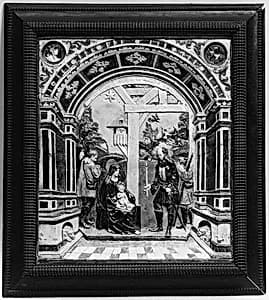
The Adoration of the Shepherds
16th century
Medium
Lead-glazed earthenware (Hafnerware)
Dimensions
25 5/8 × 21 1/2 in. (65.1 × 54.6 cm)
Classification
Ceramics-Pottery
Culture
Austrian, Salzburg
Department
European Sculpture and Decorative Arts
Museum
Metropolitan Museum of Art, New York, NY
Credit
Gift of R. Thornton Wilson, in memory of Robert Francis Kennedy (1925-1968), Senator from New York, 1968
Accession Number
68.81.1
Rights
Public Domain
Tags
Art Historical Context
Nestled in the European Sculpture and Decorative Arts collection at The Metropolitan Museum of Art,The Adoration of thes* is a vibrant 16th-century lead-glazed earthenware plaque crafted by Hans Resch, master potter from Salzburg, Austria. Measuring about 25 5/8 × 21 1/2 inches, this Hafnerware piece—named after the German word for stove makers—exemplifies the region's renowned tradition of colorful, molded terracotta reliefs. These works were often used to decorate hearths, altars, or walls, blending functionality with devotional art during the Renaissance era. The scene captures the biblical moment when humble shepherds kneel before the infant Jesus, Virgin Mary, and Joseph, radiating warmth and humility. Resch's lively modeling and rich glazes in blues, greens, and yellows bring the Nativity to life, reflecting Salzburg's Catholic piety amid the Protestant Reformation's tensions. Hafnerware's lead glazing created a durable, jewel-like sheen, making religious narratives accessible to everyday households rather than just elite patrons. Gifted to the Met in 1968 by R. Thornton Wilson in memory of Senator Robert F. Kennedy, this artwork connects centuries of faith and craftsmanship to modern remembrance. It's a testament to how Salzburg's potters elevated earthenware into high art, inviting us to ponder humility and divine light.