
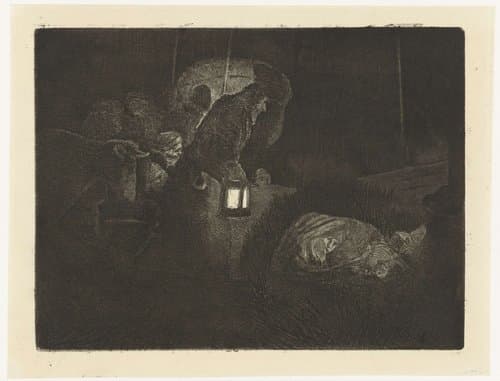
The adoration of the shepherds: a night piece
1850 - 1906
Medium
etching
Dimensions
195; 145
Rights
Public Domain
About this artwork
inscription: ‘Coppier’
Art Historical Context
Rembrandt van Rijn's *The Adoration of thes: A Night Piece is a captivating etching that captures the humble Nativity scene from the Gospel of Luke Created by the Dutch Baroque master, this work depicts shepherds reverently approaching the infant Jesus, Mary, and Joseph in a dimly lit stable, bathed in the miraculous glow of divine light. Measuring just 145mm by 195mm, its intimate scale invites close contemplation, a hallmark of Rembrandt's printmaking genius during the 17th century—though this impression dates to the later period of 1850–1906. Rembrandt's etching technique shines here, employing intricate lines and subtle aquatint-like effects to master chiaroscuro—the dramatic interplay of light and shadow. The "night piece" moniker underscores his revolutionary use of luminescence, where a heavenly radiance pierces profound darkness, symbolizing spiritual revelation amid everyday humility. As one of his many biblical subjects, it reflects the artist's deep Protestant faith and innovative approach to religious iconography. Bearing the inscription "Coppier," likely a collector's mark, this print exemplifies Rembrandt's enduring legacy in graphic arts. Produced in multiple states during his lifetime, later impressions like this preserved his vision for generations, influencing printmakers and bridging 17th-century artistry with 19th-century audiences. A testament to quiet awe and human divinity.
About the Artist
Rembrandt van Rijn · 1606–1669
Rembrandt Harmenszoon van Rijn (1606–1669) stands as one of the greatest visual artists in the history of Western art and the most important Dutch painter of the 17th century. Born in Leiden to a prosperous miller's family, Rembrandt transformed painting through his revolutionary use of light and shadow, his psychological depth in portraiture, and his elevation of etching to a fine art. His approx...