
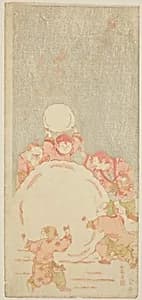
The Big Snowman
c. 1764
Medium
Color woodblock print; mizu-e hosoban
Dimensions
31.7 × 14.5 cm (12 7/16 × 5 11/16 in.)
Classification
woodblock print
Department
Arts of Asia
Museum
Art Institute of Chicago
Accession Number
7578
Rights
Public Domain
Art Historical Context
Kitao Shigemasa's *The Big Snowman* (c. 1764) captures the whimsical spirit of winter in Edo-period Japan through a delicate color woodblock print. Shigemasa, a prominent ukiyo-e artist for his illustrations of daily life, theater, and beauties, created this charming *mizu-e hosoban*—a narrow, vertical format (31.7 × 14.5 cm) ideal for affordable single-sheet prints popular among urban commoners. Produced during the vibrant Genroku era, when ukiyo-e ("pictures of the floating world") flourished in Edo (modern Tokyo), the work reflects the era's fascination with seasonal pleasures and fleeting moments. The *mizu-e* technique, using water-based pigments in subtle blues, reds, and greens applied through multiple woodblocks, marks an early innovation in multicolored printing before the more elaborate *nishiki-e* (brocade prints). This hosoban format, slimmer than standard *oban* sheets, allowed for intimate, portable art that brought joy to homes and teahouses. Shigemasa's precise lines and harmonious colors evoke a sense of playful scale, with the oversized snowman towering in a snowy scene, likely alluding to New Year's festivities or childhood wonder. Housed in the Art Institute of Chicago's Arts of Asia collection, *The Big Snowman* exemplifies how ukiyo-e democratized art, blending technical mastery with cultural delight. Visitors will appreciate its nod to Japan's enduring love for yuki daruma (snowmen) as symbols of resilience amid harsh winters.
About the Artist
Kitao Shigemasa · 1739–1820
Kitao Shigemasa (1739–1820), born in the bustling Nihonbashi district of Edo (modern Tokyo), emerged as a pivotal figure in ukiyo-e woodblock printing during Japan's Edo period. The eldest son of the bookseller Suharaya Mohei—from a lineage of publishers—Shigemasa, originally named Kitabatake Tarōkichi, was immersed in the world of printing from youth. Largely self-taught, he later studied under t...