
The Bodhisattva Avalokiteshvara Dispensing Boons: Folio from an Ashtasahasrika Prajnaparamita Manuscript
early 12th century
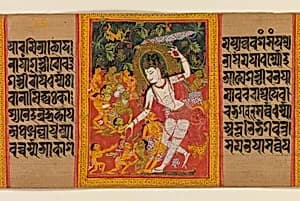
Medium
Opaque watercolor on palm leaf
Dimensions
Page: 2 3/4 x 16 7/16 in. (7 x 41.8 cm) Image: 2 1/2 x 1 15/16 in. (6.4 x 4.9 cm)
Classification
Paintings
Culture & Period
India, West Bengal or Bangladesh · Pala period
Department
Asian Art
Museum
Metropolitan Museum of Art, New York, NY
Credit
Purchase, Lila Acheson Wallace Gift, 2001
Accession Number
2001.445l
Rights
Public Domain
Tags
Art Historical Context
This exquisite folio, created by the Mahavihara Master in early 12th-century India during the Pala period (roughly West Bengal or Bangladesh), comes from an *Ashtasahasrika Prajaramita* manuscript—a sacred Mahayana Buddhist text known as the "Perfection of in Eight Thousand Stanzas It depicts the compassionate Bodhisattva Avalokhvara dispensing boons, surrounded by devotees receiving blessings. Avalokiteshvara, the embodiment of mercy in Buddhism, is shown in a serene, multi-armed form, symbolizing his boundless ability to aid suffering beings. Painted in opaque watercolor on a slender palm leaf—a traditional South Asian medium prized for its durability and portability—the artwork exemplifies Pala school's refined style. These manuscripts, often produced in monastic scriptoria like Mahavihara, blended intricate narrative scenes with vivid colors and gold accents, making complex scriptures visually accessible. The tiny image (just 2½ x 1⅞ inches) within the long page highlights the artists' mastery of miniature scale, a hallmark of this era's Buddhist art patronage under Pala kings. Housed in the Metropolitan Museum of Art's Asian Art department, this folio reflects the Pala period's golden age of Buddhist scholarship and artistry, just before Islam's rise shifted regional dynamics. It invites visitors to ponder Avalokiteshvara's enduring message of compassion amid life's trials.