
The Burmah Medal, 1824–26
1826
Medium
Bronze
Dimensions
Diameter: 1 7/16 in. (37 mm)
Classification
Medals and Plaquettes
Culture
British
Department
European Sculpture and Decorative Arts
Museum
Metropolitan Museum of Art, New York, NY
Credit
Museum Accession
Accession Number
X.14.14
Rights
Public Domain
Tags
Art Historical Context
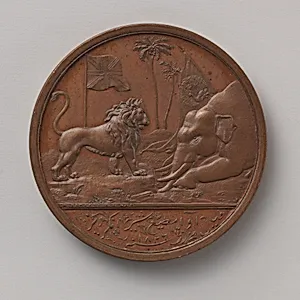
Behold the *Burmah Medal, 4–26*, a finely crafted bronze medallion by William Wyon, the esteemed chief engraver of the Royal Mint. Struck in 1826 to commemorate Britain's victory in the First Anglourmese War, this 37 mm diameter piece honors the soldiers who fought in the grueling campaign against the Kingdom of Burma (modern-day Myanmar). The obverse likely features regal portraits or symbolic emblems, while the reverse the exotic theater of war through motifs like lions—symbols of British strength—alongside soldiers, peacocks (a nod to Burmese royalty), and elephants, capturing the clash of empires in Southeast Asia. Wyon, a master of neoclassical engraving, employed intricate intaglio techniques to achieve remarkable depth and realism on the bronze surface, a medium prized for its durability and patina over time. As part of the medal tradition, it served both as a military award and a portable work of art, blending portraiture with narrative relief in the style of Renaissance plaquettes. Housed in the Metropolitan Museum of Art's European Sculpture and Decorative Arts collection, this artifact offers a tangible link to imperial history, reminding us of the human stories behind geopolitical triumphs. A testament to Wyon's precision, it invites visitors to ponder the artistry that immortalizes valor.
About the Artist
William Wyon · 1795–1851
British, Birmingham 1795–1851 Brighton