
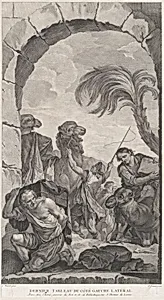
The Chapel of the Enfants-Trouvés in Paris: La Suite des rois mages: chameliers et porteurs de présents
Medium
Etching and engraving
Dimensions
Sheet (Trimmed): 20 9/16 × 11 1/4 in. (52.3 × 28.5 cm)
Classification
Prints
Department
Drawings and Prints
Museum
Metropolitan Museum of Art, New York, NY
Credit
Harris Brisbane Dick Fund, 1953
Accession Number
53.600.2415
Rights
Public Domain
Tags
Art Historical Context
Step into the enchanting world of 18th-century French Rococo art with *The Chapel of the Enfants-Trouvés in Paris: La Suite des rois mages: chameliers et porteurs de présents* (1756), a masterful etching and engraving by designer Charles Joseph Natoire and engraver Étienne Fessard. This print captures a lively procession from the biblical Adoration of the Magi, focusing on camel drivers and gift-bearing attendants trailing the Three Kings. Vividly rendered men and camels evoke the exotic splendor of the Epiphany story, their dynamic poses and intricate details showcasing Natoire's flair for graceful, theatrical compositions typical of the Rococo movement. Created for the Chapel of the Enfants-Trouvés—a Paris orphanage for abandoned children founded in the 17th century—this work adorned a sacred space blending charity with devotion. In 1756, amid France's Enlightenment era, such prints disseminated elaborate religious imagery to inspire faith and community support for the vulnerable. The chapel's decorative cycle likely aimed to uplift foundlings with tales of divine kingship and generosity. Etching and engraving techniques allowed Fessard to translate Natoire's designs with exquisite precision, from the camels' textured hides to the figures' flowing robes. Measuring 20 9/16 × 11 1/4 inches, this Harris Brisbane Dick Fund acquisition at The Metropolitan Museum of Art highlights printmaking's role in democratizing art, bridging elite patronage and public piety. A testament to Rococo's playful elegance in sacred contexts!