
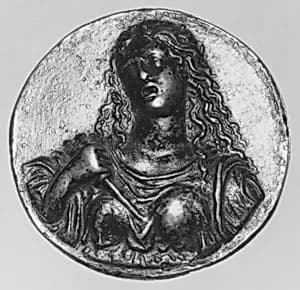
The Death of Lucretia
early 16th century
Medium
Bronze
Dimensions
Diameter: 2 in. (5.1 cm)
Classification
Medals and Plaquettes
Culture
Italian, Verona
Department
European Sculpture and Decorative Arts
Museum
Metropolitan Museum of Art, New York, NY
Credit
The Erich Lederer Collection, Gift of Mrs. Erich Lederer, 1986
Accession Number
1986.319.22
Rights
Public Domain
Tags
Art Historical Context
In the early 16th century, Italian artist Galeazzo Mondella, known as Moderno, crafted this intimate bronze plaquette titled *The Death of Lucretia*. Measuring just 2 inches in diameter, it belongs to the Renaissance tradition of medals and plaquettes—small, collectible reliefs prized by scholars and patrons for their classical themes and exquisite craftsmanship. Housed in the Metropolitan Museum of Art's European Sculpture and Decorative Arts department, this piece from Verona exemplifies Moderno's mastery of bronze casting, where molten metal captures fine details in high relief. The subject draws from ancient Roman history: Lucretia, a virtuous noblewoman, took her own life after being assaulted by the tyrant Sextus Tarquinius. Her death ignited the revolt that ended Rome's monarchy and birthed the Republic, making her a timeless symbol of chastity, honor, and resistance to tyranny. Renaissance artists like Moderno revived such legends to celebrate antiquity's moral ideals amid Italy's humanist revival. Moderno's Veronese style blends Northern Italian precision with classical inspiration, rendering Lucretia's tragic moment with emotional depth on a miniature scale. These plaquettes were not just art but conversation pieces, reflecting the era's fascination with history and virtue—perfect for a collector's cabinet or a museum visitor's contemplation.
About the Artist
Moderno (Galeazzo Mondella) · 1467–1528
Moderno, identified by scholars as the goldsmith and medallist Galeazzo Mondella (c. 1467–c. 1528), was among the most gifted Italian artists working in small-scale bronze and lead relief at the turn of the sixteenth century. The pseudonym Moderno, meaning simply "the modern one," signals both the esteem in which his contemporaries held his work and his own conscious alignment with the revival of ...