
The Doctor
1650 - 1669
Medium
oil on copper
Dimensions
49; 37
Rights
Public Domain
About this artwork
oil on copper
Art Historical Context
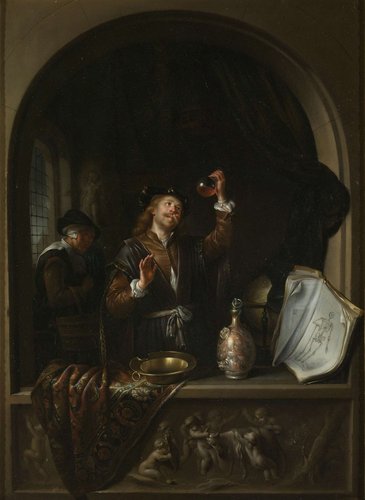
### The Doctor by Gerard Dou Step into the intimate world of Gerard Dou's *The Doctor* (c. 1650–1669), a masterful example of Dutch Golden Age painting housed in the Rijks. Dou, a prized pupil of Rembrandt and leading figure among the Leiden *fijnschilders* (fine painters), in small-scale genre scenes that capture everyday life with astonishing precision. This oil painting likely depicts a physician at work, reflecting the era's growing fascination with medicine and science amid Holland's prosperous 17th-century Republic, where such professions symbolized emerging Enlightenment ideals. Painted on copper—a rare and prized support at the time—the work measures just 49 × 37 cm, allowing Dou to exploit the metal's smooth, reflective surface for unparalleled detail and luminosity. Oil on copper enabled the *fijnschilders* to achieve hyper-realistic textures, from the sheen of fabrics to the subtle play of candlelight, creating a trompe-l'œil effect that draws viewers into a jewel-like tableau. This technique showcased technical virtuosity, making the painting a collector's treasure in its day. *The Doctor* exemplifies how Dutch artists elevated ordinary moments into profound studies of human experience, blending realism with moral undertones about care and knowledge. A true gem for its scale and skill, it invites you to linger and marvel at 17th-century mastery. (198 words)