
The Edge of a City
1880 - 1923
Medium
oil on panel
Dimensions
8; 40.5; 33; 1; 22; 30
Rights
Public Domain
About this artwork
oil on panel
Art Historical Context
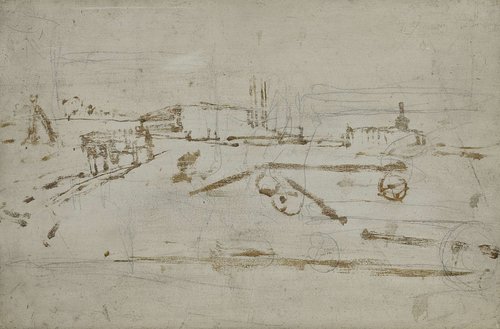
**The Edge of a City** George Hendrik Breitner (1857–1923) captures the fringes of urban life in late 19th- and early 20th-century. Painted in oil on panel between 0 and 1923, this compact work (22 × 33 cm) exemplifies Breitner's fascination with Amsterdam's evolving landscapes. As a key figure in the Amsterdam Impressionists— linked to the Hague School—he shifted from military scenes to vibrant cityscapes, portraying the grit and energy of modernization with loose, expressive brushwork. The small panel format suggests this may be a study or sketch, a technique Breitner favored for capturing fleeting atmospheric effects and everyday scenes. Oil on panel allowed for rich impasto textures and quick execution en plein air, lending immediacy to the hazy transitions between bustling streets and open expanses hinted at in the title. It reflects the era's rapid urbanization, where city edges symbolized progress and tension. Housed in the Rijksmuseum, this piece invites visitors to ponder how Breitner democratized art, elevating ordinary vistas into poetic statements on Dutch society. Its intimate scale draws you close, revealing the master's skill in evoking mood through light and shadow. (198 words)
About the Artist
George Hendrik Breitner · 1857–1923
In the early 1880s, he and Vincent van Gogh painted the residents of the working class neighborhoods of The Hague and in the province of Drenthe. Breitner moved to Amsterdam in 1886, where he became the leading painter of the Amsterdam Impressionists, documenting the urban life of Amsterdam and its residents. Comment on works: Landscapes; Views