
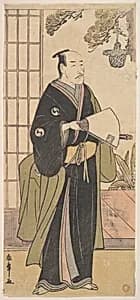
The Fifth Ichikawa Danjuro in the Role of Oboshi Yuranosuke
6th month, 1783
Medium
Woodblock print (nishiki-e); ink and color on paper
Dimensions
12 11/32 x 5 17/32 in. (31.4 x 14.1 cm)
Classification
Prints
Culture & Period
Japan · Edo period (1615–1868)
Department
Asian Art
Museum
Metropolitan Museum of Art, New York, NY
Credit
Purchase, Joseph Pulitzer Bequest, 1918
Accession Number
JP343
Rights
Public Domain
Tags
Art Historical Context
This striking woodblock print captures Ichikawa Danjūrō V, one of the most celebrated kabuki actors of his time, in the role of Oboshi Yuranosuke—the loyal leader of the-seven ronin—from the famous play *Kanadehon Chūshingura*. Created by Katsukawa Shunshō in 1783, the image exemplifies the artist’s pioneering approach to actor portraits (*yakusha-e*), which emphasized individualized facial features and expressive poses rather than generic types. Shunshō, founder of the influential Katsukawa school, helped transform ukiyo-e prints into vivid records of the Edo theater world. Produced during the height of the Edo period, such prints served as both souvenirs for theatergoers and affordable art for the public. The vertical format and bold lines typical of Shunshō’s work highlight the actor’s intense gaze and dramatic stance, inviting viewers to imagine the energy of a live kabuki performance. The subject’s connection to the enduring story of samurai loyalty resonated deeply with contemporary audiences. As a *nishiki-e* (brocade picture), the print demonstrates the advanced woodblock techniques of the late eighteenth century, using multiple carved blocks to layer rich colors on paper. Today it offers a window into Japan’s vibrant theatrical culture and the artistry that made actor prints an essential part of popular entertainment.
About the Artist
Katsukawa Shunshō 勝川春章 (Japanese) · 1726 –1792
Japanese, 1726–1792