
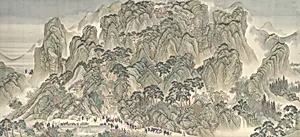
清 王翬等 康熙南巡圖 (卷三: 濟南至泰山) 卷|The Kangxi Emperor's Southern Inspection Tour, Scroll Three: Ji'nan to Mount Tai
datable to 1698
Medium
Handscroll; ink and color on silk
Dimensions
Image: 26 3/4 in. x 45 ft. 8 3/4 in. (67.9 x 1393.8 cm)
Classification
Paintings
Culture & Period
China · Qing dynasty (1644–1911)
Department
Asian Art
Museum
Metropolitan Museum of Art, New York, NY
Credit
Purchase, The Dillon Fund Gift, 1979
Accession Number
1979.5a–d
Rights
Public Domain
Tags
Art Historical Context
This magnificent handscroll, created in 1698 under the direction of the celebrated Qing dynasty master Wang Hui, forms the third installment in a grand series of twelve works documenting the Kangxi Emperor’s Southern Inspection Tour. The scroll vividly portrays the emperor’s journey from Ji’nan to the sacred slopes of Mount Tai, capturing bustling towns, winding rivers, and majestic mountain vistas. As part of the Orthodox School of painters, Wang Hui drew on classical Song and Yuan landscape traditions to create a harmonious blend of realism and idealization, celebrating both the natural beauty of the realm and the emperor’s benevolent rule. Executed in ink and delicate mineral colors on silk, the nearly forty-six-foot-long format invites viewers to unroll the scene gradually, experiencing the procession as if traveling alongside the imperial retinue. The meticulous attention to architectural details, figures, and atmospheric effects demonstrates the collaborative efforts of Wang Hui and his studio assistants, transforming a political event into an artistic masterpiece. Beyond its visual splendor, the scroll reflects the Qing court’s desire to legitimize Manchu rule by embracing Chinese cultural traditions and showcasing the emperor’s engagement with his diverse subjects. Today, it offers modern audiences a rare window into late-seventeenth-century China’s landscapes, society, and imperial aspirations.
About the Artist
Wang Hui · 1632–1717
Chinese, 1632–1717