
狂月坊|The Moon-Mad Monk, or Crazy Gazing at the Moon (Kyōgetsubō)
1789, eighth month
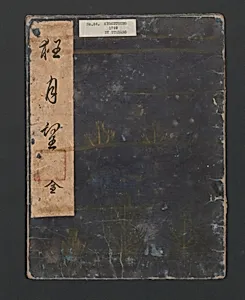
Medium
Polychrome woodblock printed book; ink and color on paper
Dimensions
Overall: 9 15/16 × 7 1/2 in. (25.2 × 19 cm)
Classification
Illustrated Books
Culture & Period
Japan · Edo period (1615–1868)
Department
Asian Art
Museum
Metropolitan Museum of Art, New York, NY
Credit
Rogers Fund, 1918
Accession Number
JIB46
Rights
Public Domain
Tags
Art Historical Context
Welcome to the Metropolitan Museum of Art's Asian Art collection, where Kitagawa Utamaro'sThe Moon-Mad Monk, or Crazy G at the Moon (Kygetsubō)* (1789) captivates with its whimsical Edo-period charm. Created in the eighth month—a time when Japan's harvest moon shines brightest—this polychrome woodblock printed book measures a intimate 9 15/16 × 7 1/2 inches. Utamaro, a ukiyo-e master renowned for his elegant depictions of courtesans and daily life, turns to an eccentric monk in lunar reverie amid trees, blending humor and poetry in ink and vibrant color on paper. Woodblock printing, a hallmark of Edo Japan (1615–1868), allowed affordable mass production through a collaborative process: artists designed, carvers shaped blocks, and printers applied layers of color for stunning depth. This technique democratized art, bringing sophisticated imagery into homes. The moon, a potent symbol in Japanese culture evoking impermanence and beauty (as in haiku), elevates the monk's "mad" gaze into a meditation on transcendence or folly. Acquired via the Rogers Fund in 1918, this illustrated book exemplifies Utamaro's versatility beyond bijin-ga (pictures of beauties), offering a delightful glimpse into 18th-century Japan's playful spirit. Gaze upon it and feel the pull of that eternal moon! (198 words)
About the Artist
Kitagawa Utamaro · 1753–1806
Kitagawa Utamaro (c. 1753-1806) was one of the most celebrated masters of ukiyo-e woodblock printing, revolutionizing the art of bijin-ga (pictures of beautiful women) during Japan's Edo period. Born Kitagawa Ichitaro, his early life remains shrouded in mystery, with conflicting accounts placing his birth in Kyoto, Osaka, Yoshiwara in Edo (modern Tokyo), or Kawagoe in Musashi Province. Under the t...