
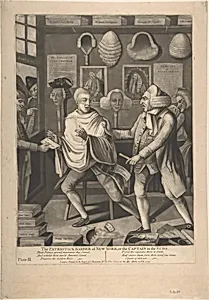
The Patriotick Barber of New York, or the Captain in the Suds
February 14, 1775
Medium
Mezzotint
Dimensions
plate: 13 7/8 x 10 in. (35.3 x 25.4 cm) sheet: 16 1/2 x 11 9/16 in. (41.9 x 29.3 cm)
Classification
Prints
Department
Drawings and Prints
Museum
Metropolitan Museum of Art, New York, NY
Credit
Gift of William H. Huntington, 1883
Accession Number
83.2.181
Rights
Public Domain
Tags
Art Historical Context
Created in February 1775, just months before the outbreak of the American Revolution, *The Patriotick Barber of New York, or the Captain in the Suds* captures the rising political tensions between colonial New Yorkers and British authorities. This satirical print depicts a barber and a military captain in a scene that highlights everyday acts of resistance and the charged atmosphere of pre-Revolutionary politics. The work reflects how ordinary tradesmen, such as barbers, became symbols of patriotic defiance during this pivotal period. Philip Dawe’s design was published by the London firm R. Sayer and J. Bennett as a mezzotint, a technique prized for its rich, velvety tones that allowed fine detail and dramatic shading. Popular in the eighteenth century for disseminating political imagery, mezzotints like this one spread satirical commentary across the Atlantic, shaping public opinion on both sides of the conflict. The presence of wigs and grooming tools subtly underscores the social and cultural stakes of the era. Now in the Metropolitan Museum of Art’s collection of prints and drawings, the sheet offers modern viewers a vivid glimpse into how humor and visual satire helped fuel revolutionary sentiment.