
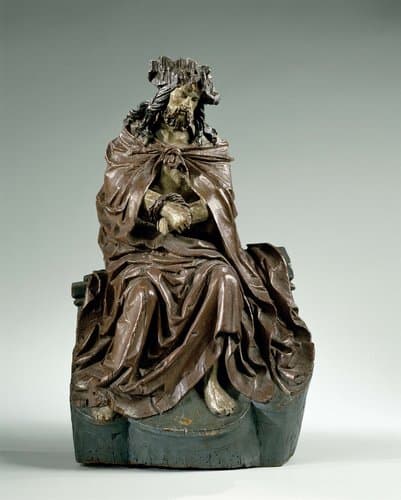
The Repose of the Lord
ca. 1530
Medium
oak with polychromy
Dimensions
43; 24; 17.3
Rights
Public Domain
About this artwork
eikenhout met polychromie
Art Historical Context
**The Repose of the Lord** (ca. 1530) is a delicate wooden sculpture attributed to an anonymous artist, crafted from oak and enhanced with polychromy—vibrant paints and gilding that bring the sacred scene to life. Standing about 43 cm tall, 24 cm wide, and 17.3 cm deep, its intimate scale suggests it was designed for personal devotion, perhaps adorning a private altar or chapel in a Northern European home during the early Renaissance. This period marked a transition from Late Gothic to Renaissance styles, where sculptors favored expressive realism in religious art amid growing Reformation tensions. Oak, a sturdy local wood, allowed for intricate carving of folds, faces, and gestures, while polychromy added emotional depth, making the holy figures appear almost lifelike to inspire prayer and contemplation. Anonymous works like this were often produced in workshops, reflecting widespread Catholic piety before Protestant iconoclasm threatened such treasures. Today, *The Repose of the Lord* offers a window into 16th-century spirituality, its preserved colors evoking the quiet reverence of bygone worshippers. A testament to skilled craftsmanship, it invites us to pause and reflect on themes of divine rest and human vulnerability.
About the Artist
anonymous
In the vast tapestry of art history, "Anonymous" stands not as a singular individual but as a collective designation for countless unidentified creators whose works have endured across millennia. These artists, spanning prehistoric cave painters to medieval illuminators and folk craftsmen, produced the foundational layers of human visual culture. Prior to the Renaissance, when individual fame emer...