
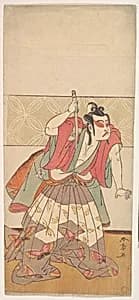
The Second Ichikawa Yaozo in the Role of Soga no Goro
2nd month, 1773
Medium
Woodblock print (nishiki-e); ink and color on paper
Dimensions
Overall: 13 x 5 3/4in. (33 x 14.6cm)
Classification
Prints
Culture & Period
Japan · Edo period (1615–1868)
Department
Asian Art
Museum
Metropolitan Museum of Art, New York, NY
Credit
Purchase, Joseph Pulitzer Bequest, 1918
Accession Number
JP382
Rights
Public Domain
Tags
Art Historical Context
Step into the vibrant world of Edo-period Japan with Katsukawa Shunshō'sThe Second Ichikawa Yaozo the Role of Soga Goro* (1773), a stunning woodblock print from the Museum of Art. Thisishiki-e, or "brocade picture," captures the famed kabuki actor Ichikawazō II in the dramatic role of Soga no Gor, one of the vengeful Soga brothers from a beloved tale of loyalty and retribution. With intense gaze, flowing robes, and a weapon at the ready, the actor embodies the heroic warrior, frozen in a moment of theatrical power. Shunshō, a leading figure in the ukiyo-e tradition—"pictures of the floating world"—specialized in yakusha-e, portraits of kabuki performers that celebrated theater culture. During the Edo period (1615–1868), these prints were affordable souvenirs for fans, bridging elite arts and popular entertainment. Kabuki, with its all-male casts and exaggerated poses (mie), was a cultural phenomenon, and stars like Yaozō were celebrities akin to modern idols. The nishiki-e technique revolutionized printmaking around 1765, layering up to 20 woodblocks for rich, multicolored effects on paper—here, 13 x 5¾ inches of vivid inks bring the stage to life. Acquired through the Joseph Pulitzer Bequest in 1918, this work highlights Japan's artistic innovation and enduring love for dramatic storytelling.
About the Artist
Katsukawa Shunshō 勝川春章 (Japanese) · 1726 –1792
Japanese, 1726–1792