
The Servants of the Dragon King of the Sea: Fish and Shells (Tatsu no miyatsuko gyokai fu) 龍の宮津子魚貝譜
1802, early autumn, (Kyōwa 2)
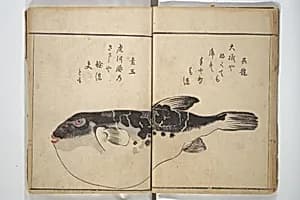
Medium
Woodblock printed book; ink and color on paper
Dimensions
9 3/4 × 6 7/8 in. (24.7 × 17.5 cm)
Classification
Illustrated Books
Culture & Period
Japan · Edo period (1615–1868)
Department
Asian Art
Museum
Metropolitan Museum of Art, New York, NY
Credit
Purchase, Mary and James G. Wallach Foundation Gift, 2013
Accession Number
2013.778
Rights
Public Domain
Tags
Art Historical Context
In the vibrant world of Edo-period Japan (1615–1868), Kuwagata Keisai's *The Servants of the Dragon King of the Sea: Fish and Shells* (1802) captures the mesmerizing underwater realm through a woodblock-printed book. Created in early autumn of Kyōwa 2, this ink and color on paper volume measures a compact 9¾ × 6⅞ inches, perfect for intimate study. Keisai, a master of nature illustration, drew inspiration from Japanese folklore, portraying fish and shells as loyal attendants to the Dragon King of the Sea (Ryūjin), a mythical deity ruling ocean depths. This work exemplifies the era's fascination with *gyokai-e*—detailed depictions of fish and marine life—blending scientific observation with artistic wonder. Woodblock printing allowed for vivid colors and intricate textures, showcasing scales that shimmer and shells with lifelike iridescence. Keisai's precise style elevated such books from mere field guides to celebrated art, reflecting Japan's growing interest in natural history amid urban prosperity. Housed in the Metropolitan Museum of Art's Asian Art Department, this 2013 acquisition invites visitors to ponder the cultural reverence for the sea, where everyday creatures become mythical servants, bridging art, science, and legend in Edo Japan's printed legacy.
About the Artist
Kuwagata Keisai 鍬形蕙斎 (Japanese) · 1764 –1824
Japanese, 1764–1824