
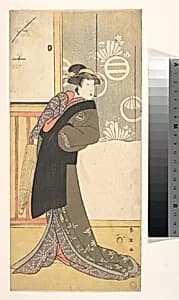
The Third Segawa Kikunojo in the Role of Maizuru
2nd month, 1789
Medium
Woodblock print; ink and color on paper
Dimensions
12 5/8 x 5 7/8 in. (32.1 x 14.9 cm)
Classification
Prints
Culture & Period
Japan · Edo period (1615–1868)
Department
Asian Art
Museum
Metropolitan Museum of Art, New York, NY
Credit
Purchase, Joseph Pulitzer Bequest, 1918
Accession Number
JP313
Rights
Public Domain
Tags
Art Historical Context
This striking woodblock print captures Segawa Kikunojo III, one of the most celebrated kabuki actors of his day, in the role of Maizuru. Created by Katsukawa Shun'ei in the second month of 1789, during Japan's Edo period, the work belongs to the vibrant tradition of yakusha-e, or actor prints. Shun'ei, a leading figure in the Katsukawa school, specialized in dynamic portraits that conveyed the expressive power and distinctive stage presence of performers, helping fans connect with the stars of the popular kabuki theater. The narrow, vertical format—typical of hosoban prints—was well suited for showcasing an actor's full figure and costume details. Printed with ink and color on paper, the image reflects the technical sophistication of ukiyo-e production, where skilled artisans carved separate blocks for each color to achieve lively effects. Such prints were affordable souvenirs that spread the glamour of the stage across Edo society. Beyond its visual appeal, the print offers a window into the cultural life of late-eighteenth-century Japan, where kabuki actors often played both male and female roles and became icons of fashion and emotion. Today it preserves a vivid record of performance and artistry from the Edo period, reminding viewers of the enduring fascination with theater and celebrity.
About the Artist
Katsukawa Shun'ei 勝川春英 (Japanese) · 1762 –1819
Japanese, 1762–1819