
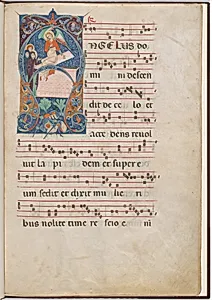
The Three Maries at the Tomb with the Angel of the Resurrection
c. 1275
Medium
miniature in tempera on leaf 1 of an antiphonal fragment on vellum
Dimensions
sheet: 55.56 × 37.47 cm (21 7/8 × 14 3/4 in.)
Classification
Drawing
Department
CG-E
Museum
National Gallery of Art, Washington, D.C.
Credit
Gift of Mr. Ladislaus and Beatrix von Hoffmann
Accession Number
2009.1.1.1
Rights
Public Domain
Art Historical Context
Behold *The Three Maries at the Tomb with the Angel of the Resurrection*, a delicate 13th-century miniature by the enigmatic Master of Imola, created around 1275. This vivid scene captures the biblical moment from the Gospels when Mary Magdalene, the Virgin Mary, and Mary Salome discover the empty tomb of Christ, greeted by a radiant angel proclaiming the Resurrection. Rendered in tempera on a vellum leaf from an antiphonal fragment—part of a liturgical book used in medieval church services for chanting antiphons—this artwork illuminated Easter rituals, bringing the miracle of resurrection to life for worshippers. The Master of Imola, an anonymous illuminator from northern Italy's Emilia-Romagna region, exemplifies the Italo-Byzantine style of the Duecento, blending Eastern gold-ground opulence with emerging Gothic naturalism. Tempera pigments, bound with egg yolk, allowed for luminous colors and fine details on the 55.56 × 37.47 cm sheet, a testament to the painstaking craft of medieval scribes and artists. As a rare surviving fragment, it offers a window into devotional art's role in daily liturgy. Today, housed in the National Gallery of Art thanks to the gift of Mr. Ladislaus and Beatrix von Hoffmann, this miniature invites us to ponder faith's enduring power, its ethereal figures frozen in awe amid the dawn of hope.