
The Wrath of Ahasuerus
1640 - 1724
Medium
oil on canvas
Dimensions
61; 11.5; 74
Rights
Public Domain
About this artwork
A.C.M.H. Kessler-Hülsmann Bequest, Kapelle op den Bosch
Art Historical Context
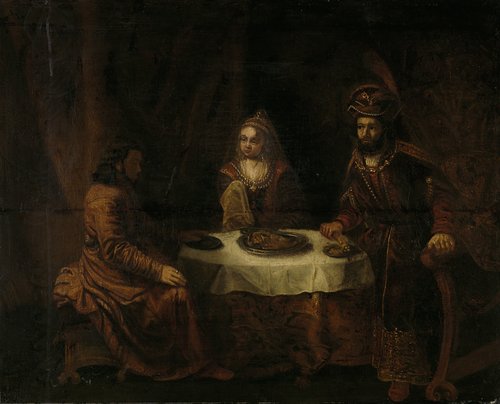
Gerbrand van den Eeckhout’s *The Wrath of Ahasuerus* captures a dramatic moment from the Book of Esther, in which the Persian king confronts betrayal at his court. Painted in oil on canvas during the Dutch Golden Age, the work reflects the period’s fascination with biblical narratives that explored themes of justice, power, and divine providence. Van den Eeckhout, a pupil of Rembrandt, employs rich color and expressive gestures to heighten the emotional tension of the scene. Measuring just 61 by 74 centimeters, the compact canvas demonstrates the artist’s ability to convey complex storytelling within an intimate format suited to private collections. Its presence in the Rijksmuseum today stems from the 20th-century bequest of A.C.M.H. Kessler-Hülsmann, underscoring how Dutch Old Master paintings moved from family estates into public institutions. The painting offers visitors a window into 17th-century Dutch culture, where religious subjects served both moral instruction and artistic display. Van den Eeckhout’s Rembrandt-trained technique—marked by strong contrasts of light and shadow—brings the ancient tale vividly to life, inviting viewers to consider the timeless consequences of pride and retribution.
About the Artist
Gerbrand van den Eeckhout · 1621–1674
Comment on works: Religious; History; Portraits; Landscapes