
The Young Horseman
c. 1766/67
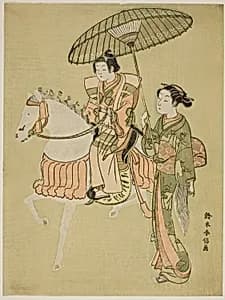
Medium
Color woodblock print; chuban
Dimensions
27.7 × 20.7 cm (10 7/8 × 8 1/8 in.)
Classification
woodblock print
Department
Arts of Asia
Museum
Art Institute of Chicago
Accession Number
21968
Rights
Public Domain
Art Historical Context
Suzuki Harunobu's *The Young Horseman created around 1766–67, is a captivating color woodblock print in the chuban format—a compact size (27.7 × 20.7 cm) popular for intimate viewing during Japan's Edo period (1603–1868). Harunobu, a master of ukiyo-e ("pictures of the floating world"), revolutionized printmaking by pioneering full-color nishiki-e techniques around 1765. This innovation used multiple woodblocks inked in vibrant hues, allowing for subtle gradients and lifelike textures that brought scenes of everyday life, beauty, and theater to the masses. This print exemplifies Harunobu's delicate style, often featuring graceful figures with refined lines and harmonious colors. The chuban size made such works affordable and portable, ideal for collectors and urban dwellers in bustling Edo (modern Tokyo). Housed in the Art Institute of Chicago's Arts of Asia department, it reflects the cultural vibrancy of 18th-century Japan, where woodblock prints democratized art, blending artistry with social commentary on youth, adventure, and the fleeting joys of life. (178 words)
About the Artist
Suzuki Harunobu · 1725–1770
Suzuki Harunobu (c. 1725-1770) was a Japanese ukiyo-e artist who revolutionized woodblock printing by developing nishiki-e—full-color prints using multiple woodblocks—in 1765. Before Harunobu, Japanese prints were limited to two or three colors; his innovation unleashed the entire artist's palette, transforming ukiyo-e into the vibrant art form that would later captivate Western artists from Manet...