
Theekom met planten
c. 1600 - c. 1699
Medium
turning
Dimensions
11.6; 6; 6.4
Rights
Public Domain
About this artwork
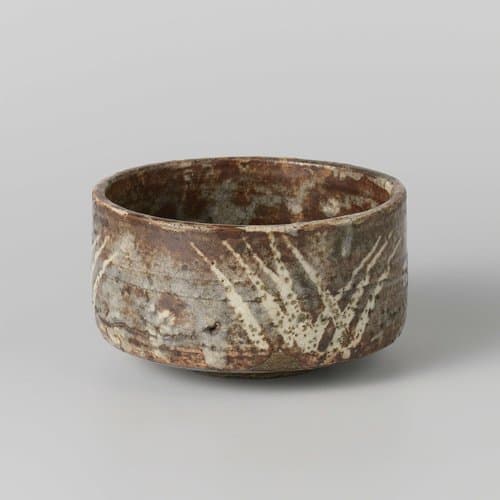
Shino. Grijze en roodbruine glazuren. Versiering van plantenmotieven in Mishima-techniek.
Art Historical Context
Nestled in the world of 17th-century Japanese ceramics *Theekom met planten (Teacup with Plants) is a delicate Shino ware teacup, anonymously crafted around 1600–1699. Shino pottery, originating from Japan's Mino province during the late Momoyama period, was celebrated for its rustic elegance and became a favorite among tea masters. This small vessel, standing just 6.4 cm high and 11.6 cm in diameter, exemplifies the's lathe-turned precision, where potters shaped clay on a wheel for smooth, balanced forms ideal for the intimate Japanese tea ceremony, *chanoyu*. The cup's surface gleams with distinctive gray and reddish-brown glazes, typical of Shino's feldspathic slips that create a textured, almost pockmarked finish evoking natural imperfections—hallmarks of *wabi-sabi* aesthetics. Its plant motifs are rendered in the intricate Mishima technique, a method borrowed from Korean celadons: fine incisions in the clay are filled with contrasting slip, wiped smooth, and fired, yielding crisp, inlaid designs that contrast beautifully with the glaze's organic flow. This fusion of techniques highlights the cross-cultural exchanges in East Asian ceramics during the period. As a tea bowl, this anonymous gem holds cultural weight, embodying the philosophy of impermanence and simplicity central to tea culture. Though modest in size, its masterful craftsmanship invites visitors to appreciate how everyday objects became vessels for profound ritual and beauty.