
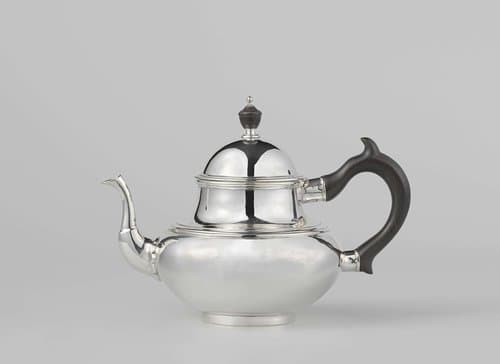
Theepot van zilver met handvat en dekselknop van ebbenhout
Medium
silver (metal)
Dimensions
12; 14.2
Rights
Public Domain
About this artwork
merk
Art Historical Context
**Theepot van zilver metvat en dekselknop van ebbenhout ( Teapot with Ebony Handle and Lidial)** *Hermanus Montauban,1727, Silver with ebony, H. 14.2 × D. 12 cm* Crafted in 1727 by Amsterdam silversmith Hermanusuban, this elegant silverapot exemplifies the refined metalwork of the Dutch Golden Age's later years. Montauban, active in the city from around 1718 1733, bore his distinctive "merk" (maker's mark) on such pieces, guaranteeing authenticity and. The compact form—standing just 14.2 cm tall with a 12 cm diameter—features a gracefully curved spout and body, accented by an ebony wood handle and lid finial. This combination of gleaming silver and dark exotic wood not only ensured a comfortable grip but also highlighted the Netherlands' global trade networks, importing ebony from Asia and Africa. In the early 18th century, teapots like this became coveted status symbols amid Europe's rising tea culture, fueled by Dutch East India Company imports. Silver vessels signified wealth and hospitality, often used in affluent households for serving the fashionable beverage. Montauban's Rococo-influenced design, with its smooth contours and functional elegance, reflects silversmithing techniques like hammering, chasing, and seaming, blending practicality with subtle luxury. Today, it offers a tangible glimpse into 18th-century Dutch domestic life and craftsmanship.