
Three Sections of Cloister Arcade
Unknown Artist
15th century
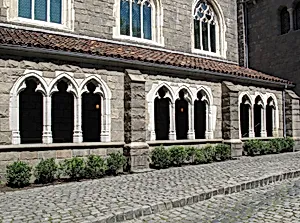
Medium
Limestone
Dimensions
(each) H. 6'10-11/16", W. (center to center) 36-1/4 in.
Classification
Installations
Culture
French
Department
The Cloisters
Museum
Metropolitan Museum of Art, New York, NY
Credit
Gift of George Blumenthal, 1935
Accession Number
35.35.6
Rights
Public Domain
Art Historical Context
Step into the serene world of medieval monastic life with *Three Sections of Cloister*, a captivating installation from 15th-century France. Crafted from durable limestone, these architectural fragments—each standing over six feet tall with spans measuring 36¼ inches center-to-center—once formed part of a cloister's covered walkway, enclosing a courtyard where monks walked in quiet contemplation and prayer. Donated to The Metropolitan Museum of Art's Cloisters by George Blumenthal in1935, they evoke the architectural splendor of late medieval monasteries. Limestone, prized for its workability and weather resistance, allowed skilled masons to carve precise arches and moldings, hallmarks of French Gothic design. Though the artist remains unknown, the precision of the stonework reflects the era's masterful blend of engineering and artistry, supporting vaulted roofs while beautifying sacred spaces. These sections highlight the cloister's role as a transition between outdoor gardens and indoor chapels, symbolizing spiritual enclosure. Today, at The Cloisters, they immerse visitors in reconstructed medieval environments, offering a tangible link to France's cultural heritage. Gaze upon them and imagine the echoes of chanting monks amid blooming cloister gardens—a testament to enduring craftsmanship.