
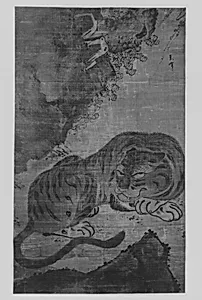
Tiger
Unknown Artist
Medium
Hanging scroll; ink and color on silk
Dimensions
60 3/4 x 36 in. (154.3 x 91.4 cm)
Classification
Paintings
Culture & Period
China · Ming dynasty (?) (1368–1644)
Department
Asian Art
Museum
Metropolitan Museum of Art, New York, NY
Credit
John Stewart Kennedy Fund, 1913
Accession Number
13.220.92
Rights
Public Domain
Tags
Art Historical Context
Behold the majestic *Tiger*, a captivating hanging scroll from China's Ming dynasty (ca. 1368–1644), though its exact attribution remains a tantalizing mystery. Crafted by an unknown artist using ink and color on luxurious silk, this painting measures an impressive 60 34 x 36 inches, designed to unfurl dramatically for display during festivals or scholarly gatherings. Hanging scrolls like this were prized in traditional Chinese homes and studios, embodying the literati ideal of art as a meditative pursuit. Tigers hold profound cultural symbolism in China, revered as kings of the beasts—fierce guardians against evil, emblems of power, and protectors of the zodiac. Rendered with delicate ink washes and vibrant colors on silk, the artist likely employed precise gongbi techniques for lifelike fur and dynamic posture, blending realism with auspicious intent. This work exemplifies Ming-era mastery, where nature's ferocity inspired moral and philosophical reflection. Housed in the Metropolitan Museum of Art's Asian Art collection, acquired through the John Stewart Kennedy Fund in 1913, *Tiger* invites visitors to ponder the wild spirit tamed by the brush, a timeless bridge to imperial China's artistic splendor.