
Tile
Unknown Artist
18th century
Medium
Tin-glazed earthenware
Dimensions
5 × 5 in. (12.7 × 12.7 cm)
Classification
Ceramics-Pottery
Culture
Dutch
Department
European Sculpture and Decorative Arts
Museum
Metropolitan Museum of Art, New York, NY
Credit
Gift of W. R. Valentiner, 1908
Accession Number
08.196.118
Rights
Public Domain
Tags
Art Historical Context
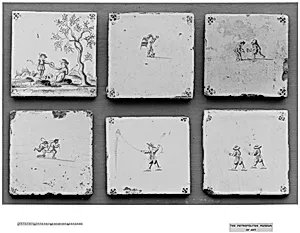
This charming 18th-century Dutch, crafted from tin-glazed earthen, exemplifies the everyday artistry of the Delft pottery tradition. Measuring a modest 5 × 5 inches, it likely depicts figures of men and women in lively scene, a common motif in these small-scale ceramics produced for home decoration. Donated to the Metropolitan Museum of Art 1908 by W.R. Valentiner, it resides in the European Sculpture and Decorative Arts collection, offering a glimpse into domestic life during the Dutch Golden Age's lingering influence. Tin-glazing, a technique where a tin oxide layer creates a brilliant white background for vibrant painted designs, allowed Dutch potters to mimic expensive Chinese porcelain at affordable prices. Fired at low temperatures, these tiles were durable and versatile, often adorning fireplaces, kitchens, and walls to protect surfaces while adding color and narrative flair. By the 18th century, mass production in centers like Delft made them ubiquitous in middle-class households across Europe. Though the artist remains unknown, this tile's survival highlights the cultural role of ceramics in storytelling—capturing social interactions, proverbs, or daily vignettes. It's a testament to Dutch ingenuity, blending functionality with subtle beauty for generations of viewers.