
Tile
Unknown Artist
ca. 1620–50
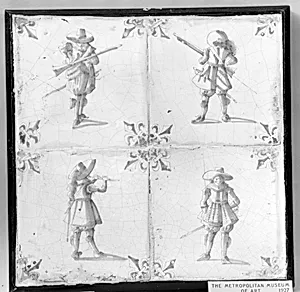
Medium
Delftware (tin-glazed earthenware)
Dimensions
Overall: 5 × 5 in. (12.7 × 12.7 cm)
Classification
Ceramics-Pottery
Culture
Dutch
Department
European Sculpture and Decorative Arts
Museum
Metropolitan Museum of Art, New York, NY
Credit
Fletcher Fund, 1927
Accession Number
27.199.507
Rights
Public Domain
Tags
Art Historical Context
This charming 5 × 5-inch Delftware tile, crafted by an unknown Dutch artist around 1620–50, exemplifies the vibrant ceramics tradition of the Dutch Golden Age. Made from tin-glazed earthenware, Delftware was a prized innovation in the Netherlands, where potters in Delft developed this technique to mimic expensive Chinese porcelain. The tin glaze created a smooth, white surface ideal for bold painted designs in vivid blues, whites, and other colors, fired at low temperatures to produce durable yet decorative pieces. These square tiles were immensely popular for adorning interiors—lining fireplaces, walls, or risers in grand homes and taverns. Depicting men, likely in everyday or narrative scenes, this example reflects the era's fascination with human figures amid booming trade and prosperity. Artistically, the medium allowed for intricate details and storytelling, blending functionality with artistry in everyday life. Today, housed in the Metropolitan Museum of Art's European Sculpture and Decorative Arts department (acquired via the Fletcher Fund in 1927), it offers a glimpse into 17th-century Dutch domestic culture, where such tiles transformed humble spaces into visual delights.