
Tile
Unknown Artist
17th–18th century
Medium
Earthenware; painted and glazed
Dimensions
H. 9 1/4 in. (23.5 cm) W. 9 in. (22.9 cm) D. 7/8 in. (2.2 cm)
Classification
Ceramics-Tiles
Department
Islamic Art
Museum
Metropolitan Museum of Art, New York, NY
Credit
Gift of Dr. and Mrs. Lewis Balamuth, 1968
Accession Number
68.215.13
Rights
Public Domain
Art Historical Context
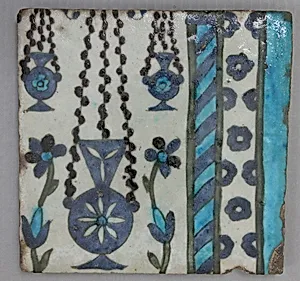
This stunning earthenware tile, crafted by an unknown artist in the th–18th century exemplifies the exquisite ceramics of Islamic art. Measuring about 9 inches square and just under an inch thick, it features a painted and glazed surface that would have shimmered vibrantly under light. Such tiles were integral to grand architectural decorations in mosques, palaces, and public baths across the Islamic world, from the Ottoman Empire to Safavid Iran, creating vast, colorful mosaics that transformed interiors into paradisiacal spaces. The medium—earthenware coated with painted glazes—highlights masterful techniques honed over centuries. Artisans fired the clay body before applying intricate designs in mineral-based pigments, then glazing and refiring for a durable, lustrous finish resistant to wear. Geometric patterns, floral motifs, or calligraphy (common in surviving examples) symbolized spiritual harmony and divine order, adhering to aniconic traditions while showcasing technical virtuosity. A generous gift to the Metropolitan Museum of Art from Dr. and Mrs. Lewis Balamuth in 1968, this tile invites us to appreciate the anonymous genius of Islamic craftsmen, whose work continues to inspire with its timeless beauty and cultural depth.