
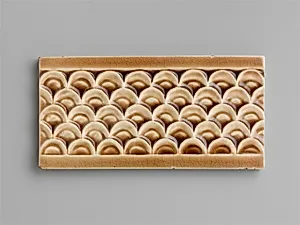
Tile
ca. 1882–84
Medium
Earthenware
Dimensions
4 1/4 x 4 1/4 in. (10.8 x 10.8 cm)
Classification
Tile
Culture
American
Department
The American Wing
Museum
Metropolitan Museum of Art, New York, NY
Credit
Purchase, Bequest of Adeline R. Brown, by exchange, 1977
Accession Number
1977.373.14
Rights
Public Domain
Art Historical Context
This charming earthenware tile, produced by J. and J. G. Low Art Tile around 1882–84, the height of American decorative arts during the Gilded Age. just 4¼ x 4¼ inches, it was crafted for architectural embellishment, such as fireplaces, hearths, or interior panels in fashionable homes. The Low brothers, based in Chelsea, Massachusetts, were pioneers in the U.S. tile industry, one of the first factories dedicated to artistic ceramics in 1877. Their works blended industrial precision with Aesthetic Movement ideals, drawing inspiration from Japanese motifs, Islamic patterns, and European maiolica traditions. Earthenware, fired at lower temperatures than stoneware or porcelain, allowed for vibrant underglaze colors and intricate designs that captured light beautifully—perfect for the era's obsession with beauty in everyday objects. Low tiles were celebrated for their durability and affordability, making high-style decoration accessible beyond elite commissions. This piece, now in The Metropolitan Museum of Art's American Wing, reflects America's growing confidence in domestic manufacturing amid the 1880s economic boom. Fun fact: J. and J. G. Low supplied tiles for iconic sites like the New York State Capitol and Trinity Church in Boston, bridging art and architecture in late 19th-century America. A small square, yet a window into opulent Victorian life!