
Tile Fragment
Unknown Artist
1334–1434
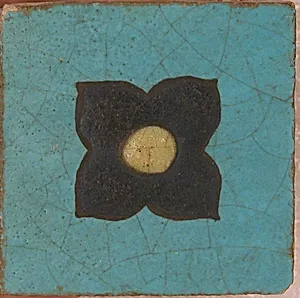
Medium
Stonepaste; polychrome painted under transparent glaze
Classification
Ceramics-Tiles
Department
Islamic Art
Museum
Metropolitan Museum of Art, New York, NY
Credit
Rogers Fund, 1945
Accession Number
45.103.22
Rights
Public Domain
Art Historical Context
This exquisite *Tile Fragment*, dating to the 14th–15th century, hails from the vibrant world of Islamic art, a period when architectural decoration flourished across the Islamic world, from Persia to the Levant. Crafted by an unknown artist, it exemplifies the era's mastery of ceramics, often adorning mosques, madrasas, and palaces with intricate designs that symbolized paradise gardens or sacred geometry. Acquired through the Rogers Fund in 1945, it now graces the Metropolitan Museum of Art Islamic Art Department, offering a glimpse into medieval splendor. The tile's medium—stonepaste, also known as fritware—represents a pivotal innovation in Islamic ceramics. Developed around the 12th century, stonepaste combined quartz, clay, and glass frit, fired to create a durable, porcelain-like body that could withstand architectural demands. Polychrome pigments, painted beneath a transparent glaze, produced luminous blues, greens, and golds that have endured centuries without fading, showcasing advanced glazing techniques that influenced later global pottery traditions. As a fragment, it invites us to imagine its role in vast tiled ensembles, where patterns created optical illusions of infinity, reflecting Islamic principles of unity and the divine. Though details of its motifs are subtle, this piece underscores the cultural prestige of tilework as both art and engineering in pre-modern Islamic societies.