
Tile Panel
Unknown Artist
second half 16th century
Medium
Stonepaste; polychrome painted under transparent glaze.
Dimensions
H. 53 5/16 in. (135.1 cm) W. 53 9/16 in. (136 cm) D. 2 3/8 in. (6 cm) with tabs Wt. 194 lbs. (88 kg)
Classification
Ceramics-Tiles
Department
Islamic Art
Museum
Metropolitan Museum of Art, New York, NY
Credit
Gift of J. Pierpont Morgan, 1917
Accession Number
17.190.2083
Rights
Public Domain
Tags
Art Historical Context
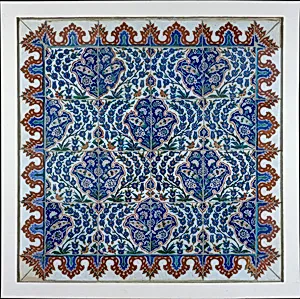
This stunning Tile Panel from the second half of the 16th century exemplifies the mastery of Islamic ceramic artists. Crafted from stonepaste and vividly painted in multiple colors under a transparent glaze, the nearly square panel—standing over four feet high and wide—features intricate designs of flowers leaves. Though the artist remains unknown, the work reflects the era's sophisticated techniques in creating durable, colorful architectural elements. The use of stonepaste, a composite of clay, quartz, and frit, provided a fine white ground for the polychrome underglaze decoration, allowing for brilliant hues that remain vibrant today. Tiles like these were essential in Islamic architecture, transforming interiors with their naturalistic motifs that evoke gardens and abundance. Donated by J. Pierpont Morgan in 1917, this piece is a highlight of the Metropolitan Museum's Islamic Art collection. Its impressive size and weight underscore the engineering behind such decorative panels, offering visitors a glimpse into the aesthetic and technical achievements of 16th-century Islamic ceramics.