
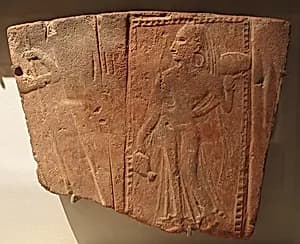
Tile showing a woman carrying a pot
Unknown Artist
5th–6th century
Medium
Terracotta
Dimensions
H. 11 5/8 in. (29.5 cm); W. 13 3/8 in. (34 cm)
Classification
Sculpture
Culture
India (ancient kingdom of Kashmir, Harwan)
Department
Asian Art
Museum
Metropolitan Museum of Art, New York, NY
Credit
Purchase, Gifts in memory of Anthony Gardner, 1994
Accession Number
1994.77
Rights
Public Domain
Tags
Art Historical Context
This terracotta tile, depicting a woman gracefully carrying a pot on her, offers a vivid glimpse into daily life in the ancient kingdom Kashmir, specifically from the Harwan region, during the 5th6th century. Measuring 11⅝ × 13⅜ inches (29.5 × 34 cm), this sculptural relief captures the poise and everyday tasks of women in this vibrant South Asian culture. Crafted from fired clay, terracotta was a favored medium in ancient India for its accessibility and durability, allowing artisans to mold intricate scenes from molds or freehand carving before firing. Unearthed from Harwan, a site rich in archaeological treasures, the tile reflects the artistic traditions of early medieval Kashmir, where such plaques often adorned shrines, monasteries, or homes. It highlights the central role of women in society, portraying them in routine yet dignified activities that underscore themes of labor, balance, and resilience. As part of the Metropolitan Museum of Art's Asian Art collection (purchase, Gifts in memory of Anthony Gardner, 1994), this piece invites us to appreciate the understated beauty of ancient Indian craftsmanship and the enduring stories of ordinary lives preserved in clay.