
Tile
late 18th–early 19th century
Medium
tiles
Classification
tiles
Department
Smithsonian Collection
Museum
Smithsonian American Art Museum
Credit
Gift of Eleanor and Sarah Hewitt
Accession Number
1920-15-158
Rights
Public Domain
About this artwork
Research in Progress
Art Historical Context
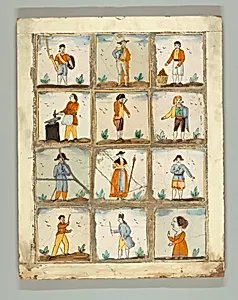
This elegant tile, dating to the late 18th or early 19th century exemplifies the decorative arts of early America. Crafted as part of the Smithsonian American Art Museum's collection of tiles, it reflects the period's growing interest in architectural embellishments for hearths, walls, and interiors. During time, tiles were prized for their durability and aesthetic appeal, often imported or produced locally to adorn prosperous homes, bringing a touch of European refinement to the new republic. Though the artist remains unknown, the tile's medium highlights skilled ceramic techniques of the era, where clay was fired and sometimes glazed to create vibrant, functional art. Donated by collectors Eleanor and Sarah Hewitt—pioneering figures in design preservation who founded the Cooper Hewitt, Smithsonian Design Museum—this piece underscores the Hewitt sisters' passion for everyday objects that shaped American material culture. Currently under research, this tile invites us to ponder its untold story: Was it part of a grand fireplace surround or a modest kitchen feature? Such artifacts remind us how ordinary items carried profound cultural weight, bridging utility and beauty in early American life.
About the Artist
Unknown
The artist designated as "Unknown" in our virtual museum's collection exemplifies a poignant chapter in art history: creators whose identities have faded into obscurity despite the enduring power of their work. With only one known artwork attributed to them in our holdings, this figure represents countless anonymous hands that shaped visual culture across centuries. Museums worldwide, including th...