
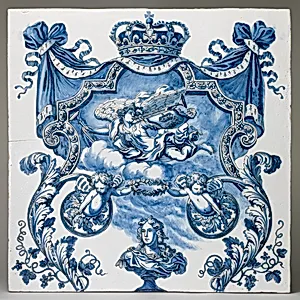
Tile with a bust of William III (1650–1702)
Medium
Delftware (tin-glazed earthenware)
Dimensions
Overall: 27 1/4 × 27 1/4 in. (69.2 × 69.2 cm)
Classification
Ceramics-Pottery
Culture
Dutch, Delft
Department
European Sculpture and Decorative Arts
Museum
Metropolitan Museum of Art, New York, NY
Credit
Gift of Irwin Untermyer, 1964
Accession Number
64.101.389
Rights
Public Domain
Art Historical Context
This magnificent Delftware tile, created around 1694 by designer Daniel Marot the Elder in collaboration with tile maker Adrianus Kocx the renowned "Greek A" Factory Delft, celebrates William III (1650–1702), the Stadtholder of the Dutch Republic and later King of England. Measuring an impressive 27¼ × 27¼ inches, this tin-glazed earthenware piece stands out for its monumental scale, far larger than typical Delft tiles, suggesting it was intended as a focal point in a grand interior, perhaps a fireplace surround or wall panel. Delftware, a hallmark of 17th-century Dutch ceramics, mimicked luxury Chinese porcelain with its vibrant blue-and-white glazes applied over tin oxide for a glossy, opaque finish. Here, Marot's Baroque flair shines through in the ornate bust of William III, surrounded by playful putti (cherubic figures) and musical instruments—symbols of harmony and celebration amid the era's political triumphs, including William's role in the Glorious Revolution of 1688. These motifs reflect Delft's booming tile industry, which exported patriotic and decorative wares across Europe. A gift to the Metropolitan Museum of Art from Irwin Untermyer in 1964, this tile captures the cultural pride of the Dutch Golden Age, blending technical innovation with royal iconography for enduring appeal.