
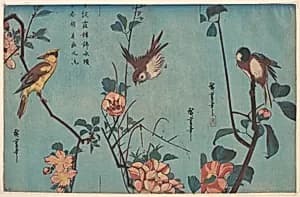
Titmouse and Camellias (right), Sparrow and Wild Roses (center), and Black-naped Oriole and Cherry Blossoms (left)
ca. 1833
Medium
Uncut triptych of woodblock prints; ink and color on paper
Dimensions
9 1/4 x 14 1/2 in. (23.5 x 36.8 cm)
Classification
Prints
Culture & Period
Japan · Edo period (1615–1868)
Department
Asian Art
Museum
Metropolitan Museum of Art, New York, NY
Credit
The Howard Mansfield Collection, Purchase, Rogers Fund, 1936
Accession Number
JP2495
Rights
Public Domain
Tags
Art Historical Context
Behold the exquisite *Titmouse and Camelliasright), Sparrow and Wild (center), and Blackaped Oriole and Cherryossoms (left)*, an uncut triptych woodblock print Utagawa Hirosh, created around 1833 during Japan's Edo period (1615–1868). This work, measuring 9¼ × 14½ inches, captures three native birds poised amid seasonal blooms—titmouse with elegant camellias, spar nestled in wild roses, and black-naped oriole amid delicate cherry blossoms—rendered in vibrant inks and colors on paper. Hiroshige, a master of the ukiyo-e ("pictures of the floating world") tradition, is renowned for his evocative landscapes, yet he excelled in *kachō-e* (bird-and-flower prints), celebrating nature's fleeting beauty. The woodblock technique, involving intricate carving and multiple color blocks, allowed for Hiroshige's signature subtlety in texture and light, evoking the transient harmony of seasons—a core theme in Japanese aesthetics known as *mono no aware*. Preserved in its rare uncut format, this triptych from The Metropolitan Museum of Art's Howard Mansfield Collection offers a window into Edo-era artistry, where birds symbolized vitality and flowers marked time's passage, delighting collectors and poets alike. A perfect emblem of Japan's poetic bond with nature.
About the Artist
Utagawa Hiroshige · 1826–1869
Utagawa Hiroshige (1797–1858), born Andō Tokutarō, was the last great master of Japanese ukiyo-e woodblock printmaking and one of the most influential landscape artists in history. Born in Edo (modern Tokyo) into a low-ranking samurai family serving as fire wardens, Hiroshige transformed landscape printmaking into a poetic meditation on nature, weather, and everyday life. His revolutionary approac...