
Toasted Mochi (a kind of rice food used during the New Year season)
19th century
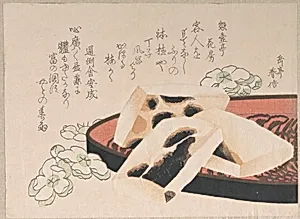
Medium
Part of an album of woodblock prints (surimono); ink and color on paper
Dimensions
5 3/8 x 7 3/8 in. (13.7 x 18.7 cm)
Classification
Prints
Culture
Japan
Department
Asian Art
Museum
Metropolitan Museum of Art, New York, NY
Credit
H. O. Havemeyer Collection, Bequest of Mrs. H. O. Havemeyer, 1929
Accession Number
JP2322
Rights
Public Domain
Tags
Art Historical Context
Yashima Gakutei *Toasted Mochi*, delicate 19th-century woodblock print from Japan’s Edo period, captures the simple joy of a New Year’s delicacy. Part of a luxurious surimono album—privately commissioned prints often exchanged as seasonal greetings—this intimate work measures just 5 3/8 x 7 3/8 inches, perfect for personal appreciation. Rendered in vibrant ink and color on paper it exemplifies ukiyo-e artistry, where everyday subjects like food gain poetic elegance. Surimono were elite connoisseur pieces, featuring embossed details, metallic pigments, and subtle calligraphy, blending visual beauty with literary wit. Here, toasted mochi—grilled rice cakes symbolizing prosperity and renewal—evokes festive rituals. Stretched over fire or skewered simply, mochi was a staple of Oshogatsu celebrations, embodying community and abundance in Japanese culture. Housed in the Metropolitan Museum of Art’s Asian Art collection, gifted through the H.O. Havemeyer bequest in 1929, this print invites us to savor tradition. Gakutei’s precise lines and harmonious palette transform humble fare into timeless art, reminding visitors of art’s power to preserve life’s quiet rituals.
About the Artist
Yashima Gakutei · 1786–1868
Yashima Gakutei (c. 1786–1868), born in Osaka as the illegitimate son of a Tokugawa shogunate samurai named Hirata, adopted the name from his mother's subsequent marriage into the Yashima clan. Little is documented about his early years beyond these familial ties, but he pursued artistic training under the esteemed ukiyo-e masters Totoya Hokkei and Katsushika Hokusai, absorbing their precision in ...