
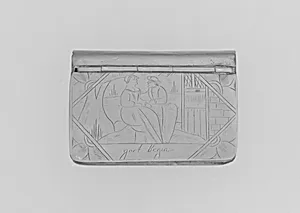
Tobacco box
Unknown Artist
17th century
Medium
Brass
Dimensions
3 3/4 x 2 3/4 in. (9.5 x 7.0 cm)
Classification
Metalwork-Brass
Culture
Dutch
Department
European Sculpture and Decorative Arts
Museum
Metropolitan Museum of Art, New York, NY
Credit
Bequest of George White Thorne, 1883
Accession Number
83.1.61
Rights
Public Domain
Tags
Art Historical Context
This exquisite 17th-century Dutch box, crafted from brass, exemplifies the refined metalwork of the Netherlands' Age. Measuring just 3 3/4 x 2 3/4 inches, its compact, portable form was designed for personal use, the era's growing fascination tobacco—a New World import that swept through after the 1600s. Adorned with motifs of couples, likely engraved or scenes of courtship or daily life, the box served not as a functional container but also as a status symbol among the burgeoning middle class. In Dutch culture, such decorative arts blended with artistry, showcasing skilled techniques repoussé (hammering the reverse) and intricate chasing to textured, narrative surfaces on the durable yet malleable brass. Tobacco paraphernalia became fashionable accessories, mirroring the prosperity of trade-driven Amsterdam and the social rituals of pipe-smoking in taverns and homes. Housed in the Metropolitan Museum of Art's European Sculpture and Decorative Arts collection, this bequest from George White Thorne in 1883 offers a glimpse into everyday luxury. Its anonymous craftsmanship underscores the collaborative workshops of the time, where functionality met whimsy in objects that captured the spirit of 17th-century leisure.