
Tobacco Box
Unknown Artist
19th century
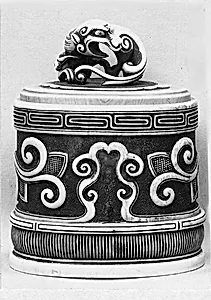
Medium
Ivory
Dimensions
H. 3 1/2 in. (8.9 cm)
Classification
Ivories
Culture & Period
Japan · Edo (1615–1868) or Meiji period (1868–1912)
Department
Asian Art
Museum
Metropolitan Museum of Art, New York, NY
Credit
Edward C. Moore Collection, Bequest of Edward C. Moore, 1891
Accession Number
91.1.928
Rights
Public Domain
Art Historical Context
This delicate ivory tobacco box, crafted by an unknown Japanese artist in the 19 century, exemplifies the exquisite craftsmanship of the late Edo period (1615–1868) or early Meiji (1868–1912). Standing just 3½ inches (8.9 cm) tall, it served as a portable container for pipe tobacco, a luxury item popularized in Japan after its introduction by Portuguese traders in the early 1600s. Part of the Metropolitan Museum of's Asian Art collection, it entered the museum through the bequest of Edward C. Moore in 1891, a noted collector of fine decorative arts. Ivory, prized for its smooth, luminous quality and carvability, was a favored medium for such personal accessories in Japan, where artisans honed intricate zōge (ivory carving) techniques. These small boxes, often carried in pouches alongside pipes and fire starters, blended functionality with artistry, reflecting everyday elegance amid Japan's transition from feudal isolation to modernization. Though details of its decoration remain unrecorded here, the object's survival highlights the skill required to shape dense elephant tusk into enduring, pocket-sized treasures. Today, this tobacco box offers a window into Edo-Meiji material culture, where tobacco smoking became a social ritual across classes, underscoring Japan's mastery of miniature sculpture.