
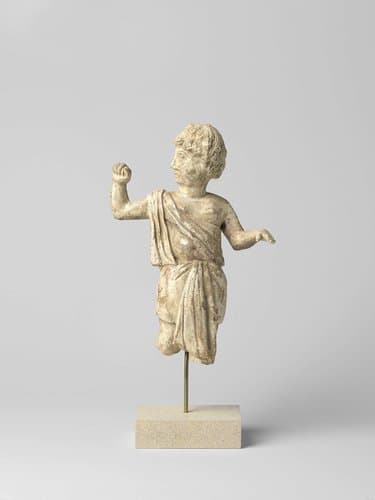
Tomb figure of a dancer
c. 618 - c. 907
Medium
formed
Dimensions
23; 9.6; 16.9
Rights
Public Domain
About this artwork
hoogte 23 cm x breedte 16,9 cm x diepte 9,6 cm
Art Historical Context
### Tomb Figure of a Dancer This charming tomb figure depicts a dancer from China's Tang Dynasty (c. 618–907 CE), a golden age of cultural flourishing, poetry, and cosmopolitanism along the Silk Road. Crafted anonymously by skilled artisans, such mingqi (spirit articles) were placed in elite tombs to entertain the deceased the afterlife, reflecting beliefs in an eternal, vibrant existence. Standing just 23 cm tall (with a width of 16.9 cm and depth of .6 cm), this sculpture captures the era's love for music and performance, where dance was a staple of courtly and funerary rituals. Formed from clay—a common medium for these durable, mass-produced figures—the dancer likely showcases the Tang style of lively realism, with fluid poses and detailed attire evoking silk robes and flowing sleeves. Though unglazed details are sparse, the craftsmanship highlights technical prowess in molding and firing, ensuring the figure's survival for over a millennium. Culturally, these artifacts reveal Tang society's prosperity and inclusivity, blending Central Asian influences with Chinese traditions. For visitors, this dancer brings the dynamism of ancient revelry to life, a testament to art's role in bridging worlds beyond death.
About the Artist
anonymous
In the vast tapestry of art history, "Anonymous" stands not as a singular individual but as a collective designation for countless unidentified creators whose works have endured across millennia. These artists, spanning prehistoric cave painters to medieval illuminators and folk craftsmen, produced the foundational layers of human visual culture. Prior to the Renaissance, when individual fame emer...