
Topaz ring stone
Unknown Artist
1st century BCE–3rd century CE
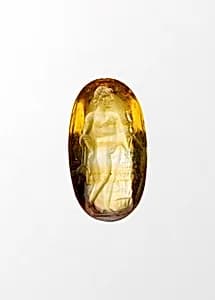
Medium
Beryl, yellow, or Topaz
Dimensions
Length: 9/16 in. (1.5 cm)
Classification
Gems
Culture & Period
Roman · Late Republican or Imperial
Department
Greek and Roman Art
Museum
Metropolitan Museum of Art, New York, NY
Credit
Gift of John Taylor Johnston, 1881
Accession Number
81.6.74
Rights
Public Domain
Tags
Art Historical Context
This exquisite topaz ring stone, carved from yellow beryl or topaz, dates to the Late Republican or Imperial Roman period (1st century BCE–3rd century CE). Measuring just 9/16 inch (1.5 cm) in length, it exemplifies the ancient art of gem engraving, where skilled lapidaries incised intricate designs into hard, precious stones for use in signet rings or jewelry. Housed in the Metropolitan Museum of Art's Greek and Roman Art Department, it entered the collection as a gift from John Taylor Johnston in 1881. Likely an intaglio depicting Hermes—the swift-footed messenger god of the Greeks, known to Romans as Mercury—this tiny gemstone captures the classical ideal of divine agility and commerce. Such portable talismans were everyday luxuries for Roman elites, serving practical purposes like sealing documents in wax while symbolizing personal piety or status. The choice of radiant yellow stone evokes Hermes' golden associations with travel and trade. Roman gem carving reached its zenith in this era, blending Greek naturalism with imperial precision. Techniques involved abrading the stone with diamond points and polishing to highlight fine details, making these diminutive works enduring testaments to artisanal mastery and cultural devotion.