
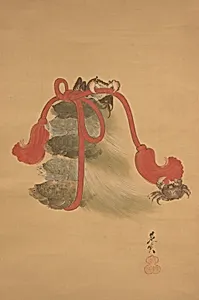
Tortoises and Crabs
19th century
Medium
Hanging scroll; ink on silk
Dimensions
39 1/8 x 14 in. (99.4 x 35.6 cm)
Classification
Paintings
Culture & Period
Japan · Edo period (1615–1868)
Department
Asian Art
Museum
Metropolitan Museum of Art, New York, NY
Credit
Purchase, Gifts, Bequests, and Funds from various donors, by exchange, 1951
Accession Number
51.137.2
Rights
Public Domain
Tags
Art Historical Context
Shibata Zeshin’s *Tortoises and Cr* (19th century) is a captivating hanging scroll from Japan’s Edo period (161–1868), showcasing the artist’s mastery of ink on silk. Zeshin (1807–1891), renowned for bridging traditional painting and innovative lacquer techniques, captures these marine creatures with lifelike precision and subtle elegance. Created during a time of cultural flourishing under the Tokugawa shogunate, such scrolls were prized for home display, unrolled for contemplation during tea ceremonies or seasonal celebrations. Rendered in delicate ink washes on luxurious silk (39 1/8 x 14 in.), the work highlights Zeshin’s skill in *sumi-e*—monochromatic ink painting—evoking texture and movement through varying brushstrokes. Tortoises, symbols of longevity and steadfastness in Japanese lore, and crabs, evoking coastal vitality, reflect Edo-era fascination with nature’s harmony and impermanence. This piece exemplifies the period’s *Nanga* and Rinpa influences, blending realism with poetic restraint. Housed in the Metropolitan Museum of Art’s Asian Art collection since 1951, *Tortoises and Crabs* invites visitors to ponder enduring life cycles amid Japan’s artistic golden age. A testament to Zeshin’s versatility, it remains a serene highlight of Edo ingenuity.
About the Artist
Shibata Zeshin · 1807–1891
Japanese, 1807–1891