
Transom panels (ramma) from the Phoenix Pavilion (Hooden)
1893
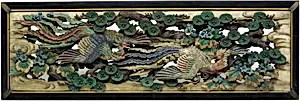
Medium
Wood with polychromy
Dimensions
92.7 × 278.8 × 20.3 cm (36 1/2 × 109 3/4 × 8 in.) (each) (appro×imate)
Classification
wood
Department
Arts of Asia
Museum
Art Institute of Chicago
Accession Number
46181
Rights
Public Domain
Art Historical Context
These exquisite transom panels, known ramma, were created by Japanese sculptor Takamura Kun in 1893 the Phoenix Pavilion (Hood). Carved from wood and finished with polychromy, each large panel measures roughly three by nine feet, revealing the impressive scale and precision possible in traditional woodworking. Kōun, a master of the Meiji era, brought refined skill to architectural decoration, blending time-honored carving methods with the period’s spirit of cultural presentation. Ramma function as both practical and ornamental features in Japanese interiors, set above doors or screens to admit light and air while displaying intricate designs. The addition of polychromy—multiple layers of color—heightens the visual richness of the carved surfaces, turning functional architecture into vivid art. These works embody the high level of craftsmanship that characterized Japanese decorative arts at the close of the nineteenth century. Now part of the Art Institute of Chicago’s Arts of Asia collection, the panels offer visitors a direct encounter with the elegance of Meiji-period wood sculpture and the role such objects played in sharing Japanese aesthetics internationally. Their presence invites us to imagine the original pavilion’s grandeur and to appreciate wood’s unique capacity for both structural grace and colorful expression.
About the Artist
Takamura Kо̄un · 1852–1934
Takamura Kōun (March 8, 1852–October 10, 1934) was a leading Japanese sculptor who modernized traditional wood carving by blending Buddhist sculptural techniques with Western-inspired realism. Born Nakajima Kōzō in Asakusa, Edo (present-day Tokyo), he was the second son of a small-scale merchant. At age eleven in 1863, he was apprenticed to the Edo-style Buddhist sculptor Takamura Tōun rather than...