
BK-15744
c. 1700
Medium
silver (metal)
Dimensions
45; 64
Rights
Public Domain
About this artwork
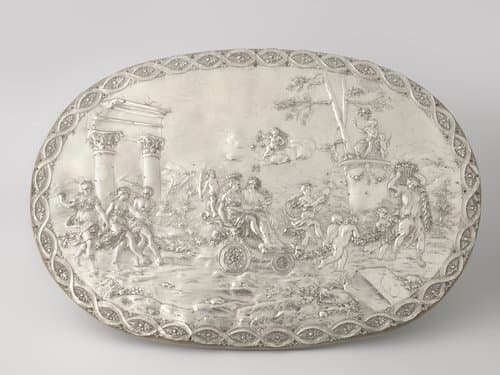
Groot ovaal reliëf, omgeven door een dubbel geslingerde rand, waarin rozetten. oorspronkelijk het middenstuk van een met zilver beslagen tafel. Op een schelpvormige zegewagen is een liefdespaar gezeten, voortgetrokken aan festoenen door een vrouw en drie knaapjes. De geliefde wordt door een achter haar staande putto, die een palmtak draagt gekroond, terwijl een zwevende putto de man met bloemen bestrooit. Naast hem een figuur met tamboerijn. Achter de wagen drie dansende vrouwen voor een tempelf...
Art Historical Context
This exquisite oval silver relief, created around 1700 by the Augsburg silversmith Albrecht Biller, originally formed the centerpiece of an elaborately decorated table. Measuring 45 by 64 centimeters, the work features a double-twisted border adorned with rosettes and depicts a joyous allegorical scene of love’s triumph. A couple rides in a shell-shaped chariot by a woman and three putti, while additional cherubs crown the beloved with a palm branch and scatter flowers over her companion. In the background, three dancing figures perform before a temple fragment, with Venus and Cupid observing from a pedestal on the right. Biller’s craftsmanship reflects height of Baroque silverwork, where Augsburg masters transformed precious metal into dynamic narrative scenes for aristocratic patrons. Such table centerpieces served both practical and symbolic purposes, celebrating themes of marital bliss and divine favor during festive banquets. The intricate repoussé and chasing techniques highlight the artist’s skill in capturing movement and emotion within the constraints of the medium. Today, this piece offers visitors a rare glimpse into early eighteenth-century European luxury arts, where mythology and meticulous metalwork combined to elevate everyday objects into statements of refined taste and cultural sophistication.