
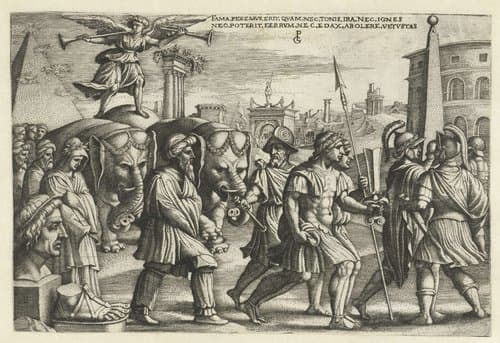
Triomf van Faam
1537 - 1541
Medium
engraving
Dimensions
207; 139
Rights
Public Domain
About this artwork
height 139 mm x width 207 mm
Art Historical Context
Georg Pencz's *Triomf van Faam* (Triumph of Fame), created between 1537 and1541, is a engraving measuring 139 mm high by 207 mm wide. As one of the German "Little Masters," Pencz was a master engraver from Nuremberg, renowned for his intricate small-scale prints that rivaled monumental works of Albrecht Dür. This piece exemplifies the Northern Renaissance's fascination with classical antiquity and allegorical themes, drawing from Petrarch's *Trionfi*—a series of poetic triumphs where virtues like Fame prevail over mortal failings. Engraving, Pencz's preferred medium, allowed for remarkable precision through incised metal plates inked and pressed onto paper, enabling widespread dissemination of humanist ideas across Europe. His fine, wiry lines and balanced compositions capture dynamic energy, blending Gothic detail with emerging Mannerist elegance. The horizontal format suggests a procession or chariot scene, symbolizing Fame's eternal victory—a potent Renaissance motif celebrating renown amid the era's printing revolution. This print not only showcases Pencz's technical virtuosity but also reflects 16th-century cultural aspirations, where art immortalized glory for collectors and scholars. A gem for any Renaissance enthusiast!
About the Artist
Georg Pencz · 1490–1550
Comment on works: Religious; History; Portraits