
Tuning Key for a Zither
Unknown Artist
3rd century BCE
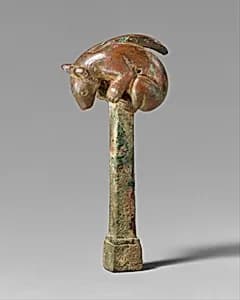
Medium
Bronze
Dimensions
H. 3 1/4 in. (8.3 cm); W. of animal 3/4 in. (1.9 cm); L. of animal 1 1/2 in. (3.8 cm)
Classification
Metalwork
Culture
North China
Department
Asian Art
Museum
Metropolitan Museum of Art, New York, NY
Credit
Gift of Mr. and Mrs. Eugene V. Thaw, 2002
Accession Number
2002.201.150
Rights
Public Domain
Tags
About this artwork
This bronze, created in 3rd century BCE, represents significant artistic achievement by Unknown Artist, whose work. The piece demonstrates the technical capabilities and aesthetic conventions of this art during this historical period. Working in bronze, the artist employed materials and techniques characteristic of the era, creating visual effects that convey both subject matter and artistic vision. Museum collections preserve such works to ensure continued study and appreciation, providing oppo...
Art Historical Context
This delicate bronze tuning key for a zither, crafted in North China during the 3rd century BCE, offers a glimpse into the refined artistry of the Warring States period. Measuring just over 3 inches tall, with a small animal motif spanning less than 2 inches, it was a practical tool for musicians to adjust the strings of the zither—an ancient stringed instrument central to Chinese courtly and ritual music. The unknown artisan's work highlights the era's mastery of bronze casting, a medium prized for its durability and ability to capture intricate details, transforming everyday objects into enduring symbols of cultural sophistication. The key's animal form, evident in its tagged features, reflects the widespread use of zoomorphic designs in Chinese metalwork, blending functionality with symbolic power. Animals often evoked harmony, protection, or natural forces, aligning with the philosophical ideals of the time. Surviving intact after over 2,300 years, this piece—now in the Metropolitan Museum of Art's Asian Art collection—demonstrates advanced lost-wax or piece-mold techniques that allowed for precise, expressive sculpting on a miniature scale. As a gift from Mr. and Mrs. Eugene V. Thaw in 2002, it invites visitors to ponder the lives of ancient musicians and the ingenuity of their tools, preserving a tangible link to China's musical heritage and the artistry that accompanied daily rituals.