
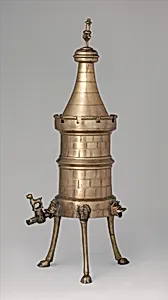
Turret Laver
Unknown Artist
15th century
Medium
Bronze
Dimensions
Overall: 21 x 5 7/8 in., 6.299lb. (53.3 x 14.9 cm, 2857g)
Classification
Metalwork-Bronze
Culture
German
Department
The Cloisters
Museum
Metropolitan Museum of Art, New York, NY
Credit
The Cloisters Collection, 1947
Accession Number
47.101.56a, b
Rights
Public Domain
Tags
Art Historical Context
This elegant bronze turret laver, crafted in 15th-century Germany, exemplifies the refined metalwork traditions of the late Middle Ages. Standing over 21 inches tall, vessel’s distinctive tower-like form evokes the architectural silhouettes of medieval castles and churches, blending utility with symbolic ornament. As a laver—an ewer used for handwashing—it would have served both practical and ceremonial purposes in noble households or ecclesiastical settings, reflecting the period’s emphasis on ritual cleanliness and hospitality. Created by an unknown artisan, the piece showcases the technical mastery of German bronze casting, where molten metal was poured into detailed molds to achieve its slender profile and decorative elements. The presence of dog motifs alongside the turret design adds a layer of lively narrative, possibly alluding to loyalty, guardianship, or hunting scenes popular in medieval imagery. Housed in The Met Cloisters, this object offers visitors a tangible connection to the daily rituals and artistic ingenuity of its time.