
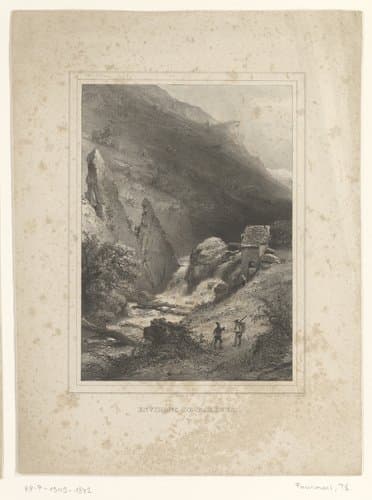
Twaalf gezichten op de Pyreneeën
Medium
lithography
Dimensions
264; 355
Rights
Public Domain
About this artwork
height 355 mm x width 264 mm
Art Historical Context
Théodore Fourmois’s *Twaalf gezichten op de Pyreneeën* (Twelve Views of the Pyrenees) is a set of lithographs created in 1835 that captures the dramatic mountain landscapes along the border between France and Spain. At a time when travel to remote regions was becoming fashionable among Europe’s educated classes, such print series offered viewers an accessible way to experience the grandeur of nature from afar. Each sheet measures roughly 355 by 264 millimeters, a convenient size portfolios or albums that could be enjoyed in private homes. Lithography, still a relatively new medium in the 1830s, allowed Fourmois to render subtle gradations of light and shadow across rocky peaks and valleys with remarkable softness and tonal depth. Unlike earlier engraving techniques, the process preserved the artist’s spontaneous, sketch-like touch, giving the views an immediacy that appealed to Romantic sensibilities. The choice of the Pyrenees as reflects the era’s growing fascination with “sublime” landscapes—places where human scale is dwarfed by vast, untamed terrain. Today the series stands as an early example of how printmaking helped shape public appreciation of Europe’s natural wonders. Visitors can imagine nineteenth-century viewers turning the pages and mentally journeying through these remote passes, an experience Fourmois made both affordable and visually poetic.
About the Artist
Théodore Fourmois · 1814–1871
Théodore Fourmois (1814–1871) was a pioneering Belgian landscape painter and printmaker who played a crucial role in liberating Belgian art from academic conventions and establishing a distinctly Belgian tradition of plein air landscape painting. Born in Presles in 1814 and dying in Ixelles in 1871, Fourmois bridged the Romantic and Realist movements in Belgian art, combining emotional responsiven...