
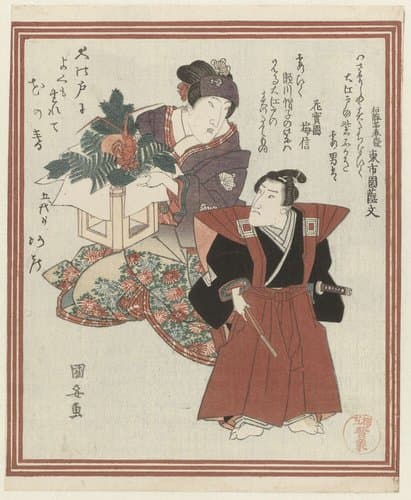
Twee acteurs bij Nieuwjaarsdecoratie
1830
Medium
nishikie, with blindprinting and embossing
Dimensions
212; 172
Rights
Public Domain
About this artwork
hoogte 212 mm (shikishiban) x breedte 172 mm
Art Historical Context
**Twee acteurs bij Nieuwjaarsdecor** (Two Actors by New Year's Decoration) is a charming ukiyo-e woodblock by Utagawa Kunasu, created in 1830 during Japan's Edo period. Kuniyasu, a talented member of the prolific Utagawa school, in yakusha-e—vibrant portraits of kabuki actors. This intimate scene likely captures two performers posed amid festive New Year's ornaments, evoking the joyous spirit of oshogatsu celebrations, when such decorations symbolized renewal and prosperity. At just 212 mm high by 172 mm wide in the compact shikishiban format, it was designed for personal enjoyment, perhaps as a keepsake or album leaf. The print exemplifies nishikie, or "brocade pictures," renowned for their rich, multicolored layers achieved through meticulous woodblock printing. Kuniyasu elevates it with advanced techniques like blindprinting (gauffrage) and embossing, which create subtle textures—raised patterns and subtle reliefs—mimicking luxurious fabrics without additional color. These innovations heightened the tactile allure of ukiyo-e, bridging art and craft in a time when printmaking democratized beauty for urban audiences. Culturally, this work reflects Edo Japan's obsession with kabuki theater and seasonal rituals, blending entertainment with tradition. As a snapshot of fleeting festivities, it invites us to appreciate the artistry that brought New Year's magic into everyday homes.