
542
Medium
lithography
Dimensions
338; 249
Rights
Public Domain
About this artwork
verzamelaarsmerk, verso, gestempeld: Lugt 2228a
Art Historical Context
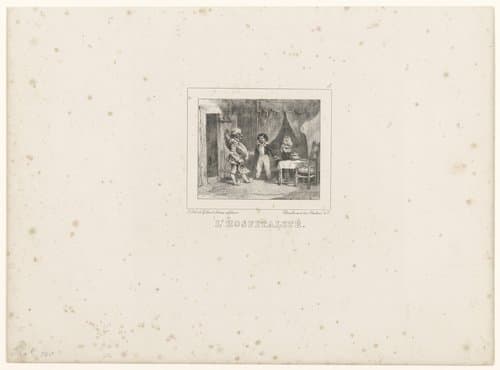
**Nicolas Toussaint Charlet’s *542* (1830)** Nicolas Toussaint Charlet (1792–1845), a leading French lithographer of the Romantic era, crafted *542* in 1830—a pivotal year marked by the July Revolution, which toppled the Bourbon monarchy and ushered in the July Monarchy. Known for his spirited depictions of soldiers, veterans, and everyday Parisian life, often infused with humor and nostalgia for Napoleonic glory, Charlet elevated lithography from a novel technique to a vibrant medium for social commentary. This print, measuring 249 × 338 mm, exemplifies his skill in capturing the era's military fervor and human warmth. Lithography, pioneered around 1798, allowed artists like Charlet to draw directly on stone with greasy crayon, producing rich tonal gradations and fine details ideal for affordable, reproducible art. Charlet’s works democratized imagery of France’s heroic past, bridging fine art and popular culture during a time of political upheaval. The subtle textures and dynamic compositions in pieces like *542* highlight why he was dubbed the "poet of the barracks." A collector’s mark stamped on the verso (Lugt 2228a, associated with esteemed 19th-century collector Eugène Dutuit) attests to its provenance, enhancing its allure for connoisseurs. This modest yet masterful lithograph invites visitors to ponder the intersections of art, history, and memory in post-Revolutionary France.
About the Artist
Nicolas Toussaint Charlet · 1792–1845
Comment on works: genre